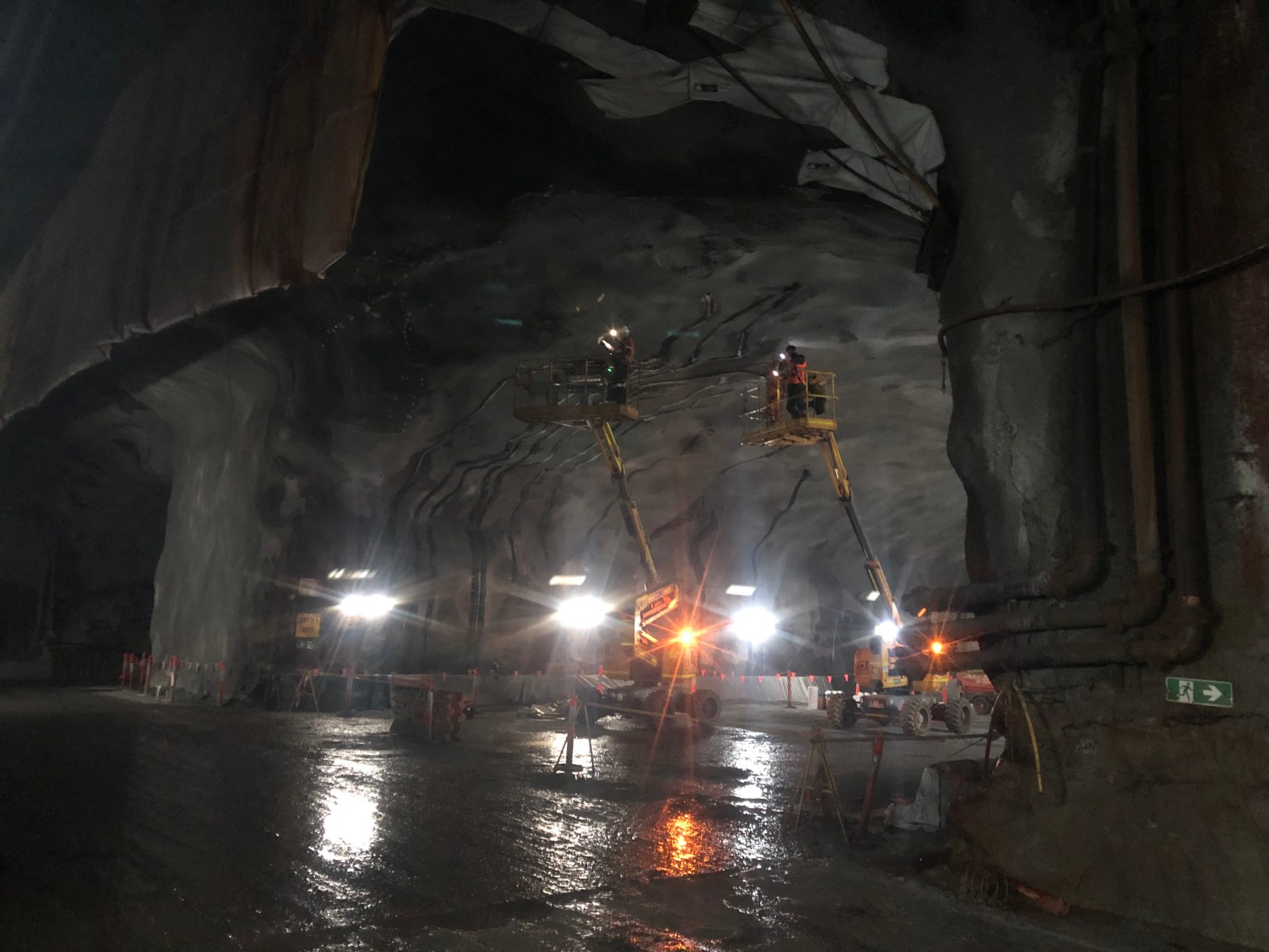
With increasing urban population density and traffic loads, tunnel infrastructure is often the difference between commuters reaching their destination and transportation grinding to a halt. Tunnels help to alleviate congestion, promote healthier traffic flow, and minimise disruption in suburban areas making them increasingly important for metropolitan growth areas.
For example, in Greater Sydney, New South Wales, hundreds of thousands of vehicles travel through the city every day. According to the latest motor vehicle census, there were 5,892,206 motor vehicle registrations in New South Wales in 2020, suggesting that roads will continue to feel the strain of heavy traffic.
With infrastructure projects currently booming across Australia, there are a number of large-scale tunnels that will commence in the coming months, such as the new Sydney Harbour tunnel in New South Wales and the North East Link project in Victoria. However, while the infrastructure boom is great for the economy, keeping these projects on track and within budget will be critical.
There are several challenges and considerations that make the development and ongoing maintenance of tunnel infrastructure incredibly complex. From BLN Asset Remediations perspective, as a ground engineering industry leader consulting on a number of large scale projects for more than two decades, our team has seen first hand what is needed to be done to ensure the safety, quality and longevity of Australia’s most utilised transport corridors.
Considerations for tunnel infrastructure
On the surface (or rather below the surface), tunnels appear sturdy and reliable. However, they are like any piece of infrastructure and require maintenance and repair over time. Tunnels are particularly susceptible to degradation when surrounding ground conditions have not been fully considered during construction. For example, unconsolidated soil can result in a soft and often precarious envelope for tunnels that is prone to shifting.
This can be problematic for Sydney, given the area’s geological profile which consists of weak and unconsolidated sandstone. Water tables, where groundwater saturates spaces between sediments and cracks in rock, are another major consideration for tunnel construction, as well as paleochannels, which are inactive water channels that have been filled or buried by younger sediment. These geological occurrences, if not identified and planned for in advance, can significantly affect a tunnel’s structural integrity and exposed surface over time either through ground movement and cracking, or significant water ingress that can slowly degrade the structure.
A lack of planning and proactive mitigation of waterproofing and ground reinforcement, are common in tunnel construction. However, this is not always a sign of negligence; tunnels often take decades to deteriorate and the immediate demand, or available funds, can sometimes influence the cost-to-benefit decisions for long term planning and maintenance. In other words, a tunnel’s construction is often planned around the urgency to help keep traffic moving, rather than addressing an unforeseen issue that may arise several decades down the track.
Remediating problems before they occur
With increasing pressure on roads in our expanding urban centres, the need for tunnel infrastructure is always growing. Unfortunately, there is no magic spell to completely alter the existing geological landscape. Instead, successful tunnel construction hinges on a combination of careful pre-construction planning, ground and risk analysis, and the ability to use effective remediation solutions if needed.
While ongoing maintenance is important, the quality and longevity of our tunnels should not be compromised. Fixing problems that have already emerged can be incredibly costly. Instead, detailed planning, site surveying and a thorough geotechnical analysis of the surrounding ground conditions should take place well before construction begins, with tailored solutions introduced before and during the construction phase.
Understanding what solutions and application techniques to use for different tunnel systems and ground conditions is vital to mitigating potential issues. It is why Mainmark is continually developing and trialling new applications and solutions for long term performance.
By utilising state of the art technology and by selecting the right materials for the task, can help engineers and designers minimise the risk of issues, such as water ingress, by forming impenetrable barriers tailored to specific substrates. Our range of proven, hard-wearing water stop solutions are non-invasive, easy to apply and cost effective to help to meet project timelines and objectives.
Using the latest technology, BLN Asset remediation can tailor the strength, viscosity and flowability of available solutions to help reinforce tunnel substrates and address surrounding weak ground using solutions such as ground consolidation, pressure and permeation grouting . Our fast-acting water stop solutions are also ideal for urgent emergency works, stopping leaks within minutes, which is a superior outcome for high-risk projects.
Ultimately, recent and proven technologies and capabilities challenge traditional standards and approaches to tunnel construction and remediation. By utilising the right solutions, we can ensure the quality and longevity of Australia’s existing and future tunnel infrastructure for decades to come.
[1] https://www.abs.gov.au/statistics/industry/tourism-and-transport/motor-vehicle-census-australia/latest-release
 BLN Asset Remediation